ICC-Languages Webinars

Helen Bulluck & Damian Fäh | EUROLTA – European Certificate in Language Teaching to Adults: Professionalisation Pathways for Aspiring Language Teachers
January 14 (Wed) 2026 | 5:00-6:00 pm CET
Moderator: Ian McMaster
Abstract:
This presentation explores the recent restructuring of the EUROLTA (European Certificate in Language Teaching to Adults) program, highlighting key innovations that enhance flexibility and relevance for trainee teachers. The traditional eight-module structure has been streamlined to six, ensuring a more focused and efficient learning experience. A major enhancement is the introduction of elective modules, allowing trainees to tailor their learning pathways to their professional needs and interests. Additionally, the program now integrates Artificial Intelligence (AI) in language teaching, equipping future educators with the skills to leverage AI-driven tools for lesson planning, assessment, and learner engagement. These changes position EUROLTA as a forward-thinking certification that meets the evolving demands of language education in the digital age.
Bio:
Born in Belfast, Northern Ireland, Helen studied Education and Educational Psychology at Queens University and at the Open University. After teaching in the school system for a few years she moved to Germany. She continued teaching privately along side working in the entertainment industry. For the last 25 years she has taught business, technical and medical English at many companies in the Frankonian region of Germany including Schaeffler, Siemens, Bosch etc.as well as designing courses for the companys’ particular requirements. She teaches at the University of Applied Sciences in Coburg as well as the FHM in Bamberg, a private university. She sits on the examination board of the Chamber of Commerce in Upper Frankonia. She is an EUROLTA trainer for the BVV in Bavaria training in English and German and is a member of the online trainer team for the ICC.
Damian Fäh has a master’s degree in general history, environmental sciences and English literature and is a certified education and training manager with seven years of experience in various fields of adult education. He is currently an innovation manager and product developer for Flying Teachers in the fields of basic skills provision, German as a second language and teacher-training. He is also an active teacher-trainer in EUROLTA as well as the Swiss SVEB and fide certificate courses, and in basic skills trainings focusing on digital literacy. Before his current position, he managed an integration program for adult refugees, where he developed content, curricula and quality management processes for German as a second language, intercultural competence and job-application training and also worked as a trainer in these subjects.
With the exception of celebratory and promotional events, our webinar recordings become available to the public on the ICC YouTube channel six months after the live session. ICC Members, however, enjoy exclusive early access to these recordings via the Member Area shortly after the broadcast.
Please note that certificates of attendance are offered exclusively to ICC members upon request.
We use Zoom to conduct the online meeting. As the ICC is a registered association in Germany, where data protection is of utmost importance, we respectfully request your cooperation in ensuring the privacy of all attendees. In line with data protection regulations, please refrain from capturing screenshots during the webinar that include participants with their cameras on, unless explicit consent has been obtained from those individuals.
We thank you for your understanding and adherence to these principles.
Information on data processing can be found here.
For our previous webinars, please see Webinars archive.


 The speaker: Dr Luke Prodromou has a BA from Bristol University in English, an MA in Shakespeare Studies from the Shakespeare Institute, Birmingham University, a Diploma in Teaching English as a Second Language (Leeds University), and a PhD (Nottingham University). His PhD thesis was published as English as Lingua Franca: A Corpus-based Analysis (Continuum, 2010). He is the author—with Lindsay Clandfield—of the award-winning Dealing with Difficulties and numerous textbooks for students of English.
 Nick Michelioudakis (B. Econ., Dip. RSA, MSc [TEFL]) has been active in ELT for many years as a teacher, examiner, presenter and teacher trainer. He has worked for many publishers and examination boards and has given seminars and workshops in numerous countries. He has written extensively on Methodology, though he is better known for his ‘Psychology and ELT’ articles which have appeared in numerous newsletters and magazines. His areas of interest include Psychology, Student Motivation, Learner Independence, Teaching one-to-one and Humour.
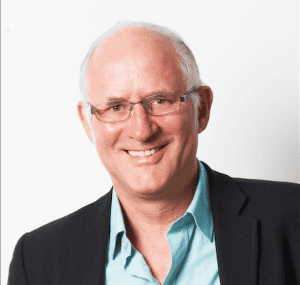 Ian McMaster is a business communication consultant, author, and journalist. He was editor-in-chief of the business communication magazine Business Spotlight from 2001 to 2021. He is a former coordinator of IATEFL Business English SIG and a member of the ICC board. His latest publication (in English, with Bob Dignen) is Trainingsbuch Business English – Kommunikation und Zusammenarbeit in internationalen Teams (Haufe. 2023)


 Ben and David Crystal’s 2023 book
 Bio:
Bio:  The phenomenon that some people can handle the challenges of cultural diversity more successfully than others has long been well-known. In the wake of numerous investigations since the 1950’s, this ability has been conceptualised – with slight variations in emphasis and terminology – as the capacity to communicate and interact effectively and appropriately with members of other cultures. This competence has been variously designated more recently as intercultural interaction competence (Spencer-Oatey & Franklin, 2009), global dexterity (Molinsky, 2013), and cultural agility (Caligiuri, 2021). A Delphi study (Montecinos Baumann & Grünfelder, 2022) recently generated the further, differently nuanced conceptualisation of transcultural competence.
 The Arab World is not only strategically a very important region full of natural resources but also a huge market with potential growth. Still, many stereotypes and lack of knowledge about the region as well as the culture and the religion make it very difficult for foreign companies to do business successfully there. What are the peculiarities of Arabs? How do they tick and think? What is an Arab? Is an Arab necessarily a Muslim and is every Muslim automatically an Arab? Does the Arab World exist?


 GEORGE F. SIMONS, MA, DMin
 Arja Krauchenberg holds a BA in French and an MA in romance languages from Vienna University with a special focus on multilingualism, diversity and interculturalism and has also trained as a certified tourist guide.
 Prof Nikolay Slavkov is Director of the Canadian Centre for Research and Studies in Bilingualism and Language Planning (CCERBAL) at the Official Languages and Bilingualism Institute (OLBI) of the University of Ottawa. His research contributions include keynote addresses, edited volumes, journal articles, and book chapters on language pedagogy and innovation, child language development, family language policy, technology, bilingualism, multilingualism, and (Slavic) linguistics. His work has appeared in the AILA Review, Canadian Modern Language Review, International Journal of Multilingualism, International Journal of Bilingual Education and Bilingualism, Foreign Language Annals, Second Language Research, Immersion Journal, Canadian Journal of Applied Linguistics, TESL Canada, Lingua, and Journal of Slavic Linguistics. He has taught in Canada, the United States, China, and Bulgaria.


